
Diamond and engagement ring store interior design on Surawong Road, Bangkok — a 120 sq m house over two levels, planned around the least rehearsed purchase most people ever make.
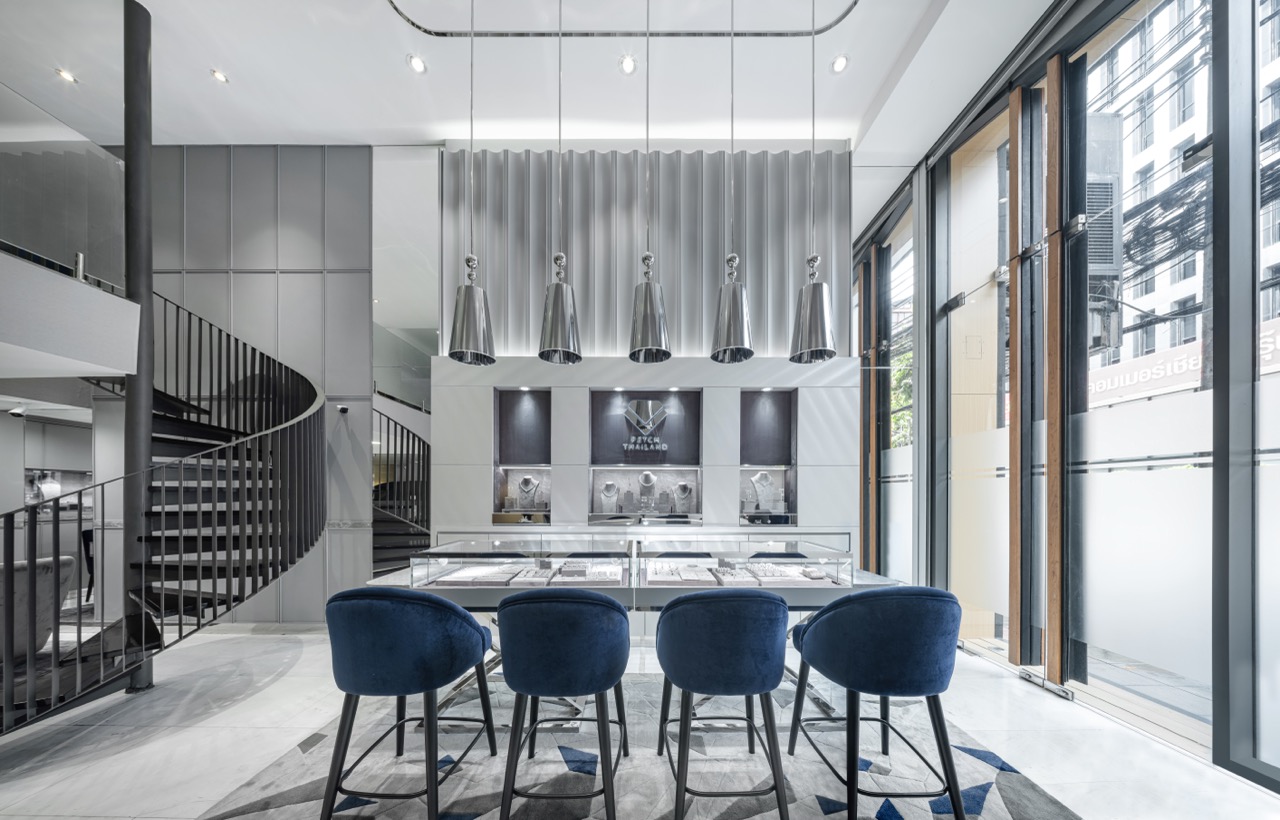
The customer has never done this before
Most retail is designed for people who already know how to shop in it. A diamond house is not that. The majority of the people who walk into Petch Thailand are buying a diamond for the first and only time in their lives. They are spending more than they have spent on anything except a car or a deposit. They have read enough online to know that there is a great deal they do not know, and they are aware that everybody behind the counter can tell.
That is the brief. Not the display cases, not the finishes — the fact that the single largest barrier in the room is the customer’s own uncertainty, and that a floor plan can either relieve it or make it worse. Engagement ring store interior design begins there, or it does not begin at all.
Confidence is a planning problem
The instinct in jewellery retail is to close the distance quickly: greet at the door, move the customer to a case, begin. It is efficient and it is exactly wrong for this buyer. Being met at the threshold by a specialist, while carrying a decision you do not yet understand, is not hospitality. It is exposure.
So the plan gives ground before it takes any. There is a distance inside the entrance that belongs to the customer — enough to arrive, take the room in, and locate the staff before the staff arrive at them. Nothing is sold in it. Its only function is to let a first-time buyer stop performing for a moment, which is the point at which they become able to ask a real question.
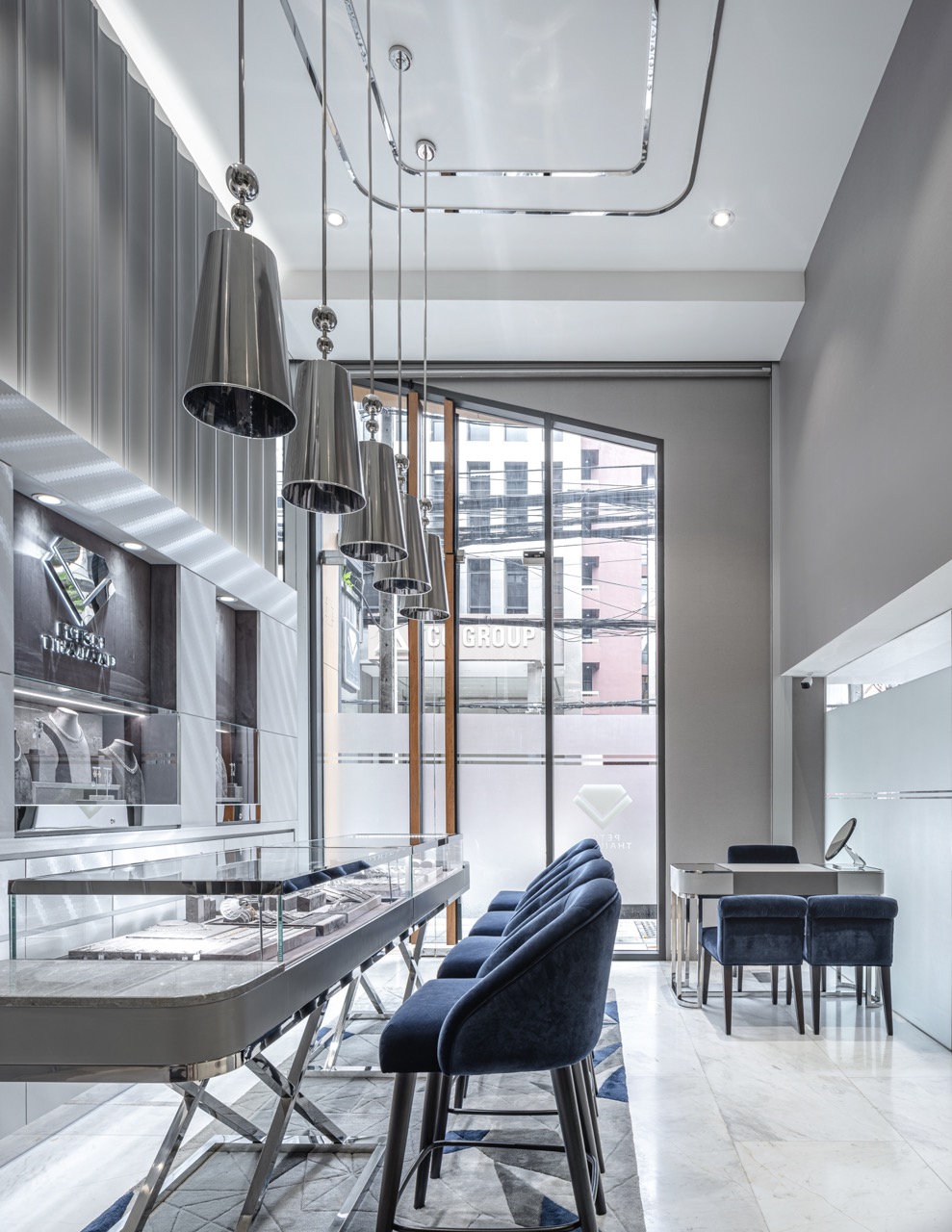
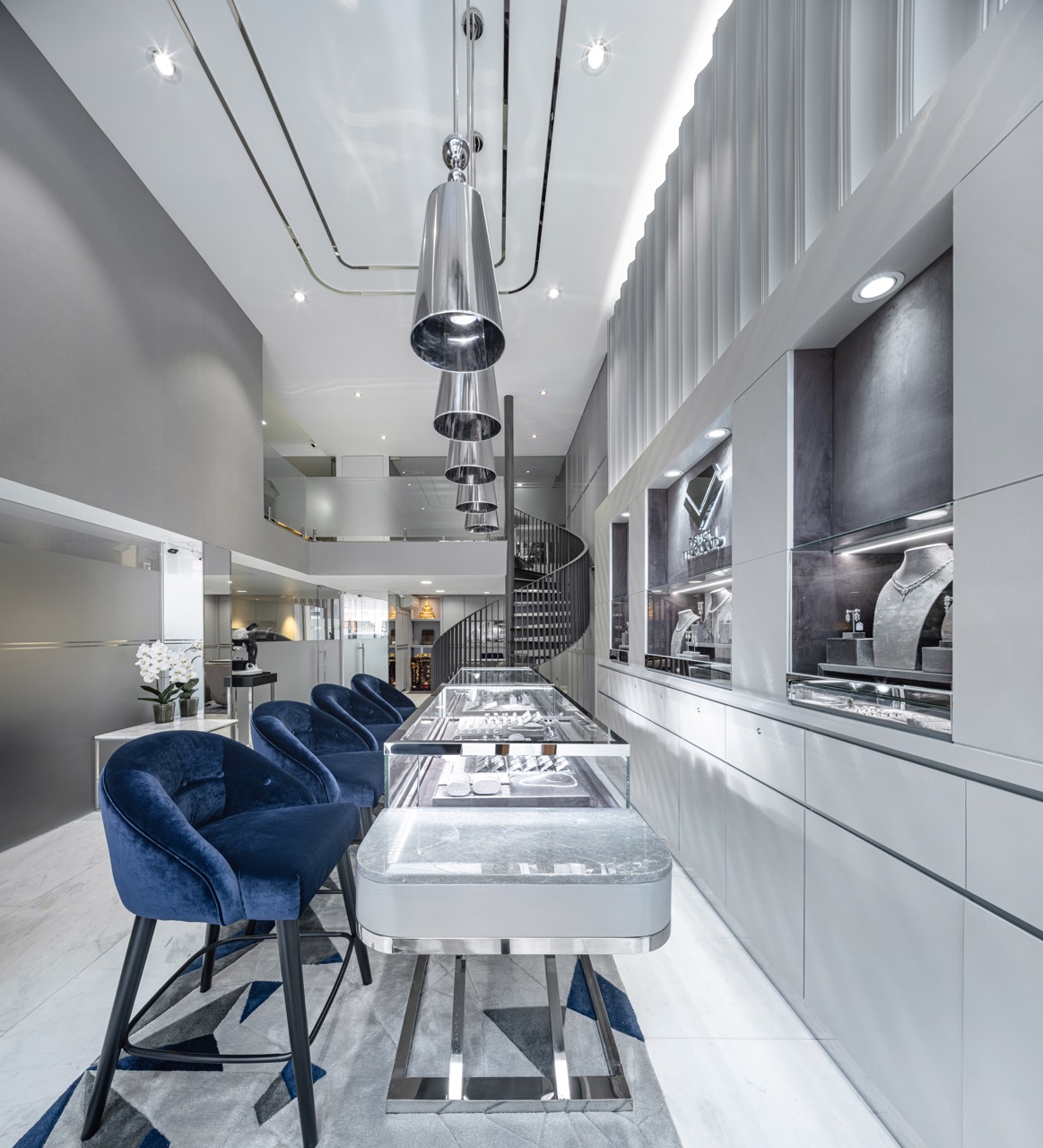
Everything after that is seated. A ring is not a counter transaction; it is forty minutes of comparison, explanation and second-guessing, and a standing customer will cut that short out of politeness long before they are ready to decide. Seating is therefore not a courtesy in this store, it is the mechanism that allows the sale to take the time it actually needs.
One decision, taken in order
In engagement ring store interior design, the floor is sequenced the way the decision is made rather than the way the stock is categorised. Orientation first — what the customer is looking at and how it is graded. Then comparison, where stones are set against each other under conditions that do not flatter one over another. Then selection. Then the private end of the process, off the open floor.
That last stage matters more here than in most retail, because a proposal is a secret. The buyer frequently arrives alone, sometimes on a lunch hour, and is not looking to discuss a budget within earshot of the room. The consultation space was planned as a genuine enclosure rather than a gesture at one, and lifted to the mezzanine on a stair set close to the entrance, so a client reaches privacy without being walked the length of the selling floor to find it.
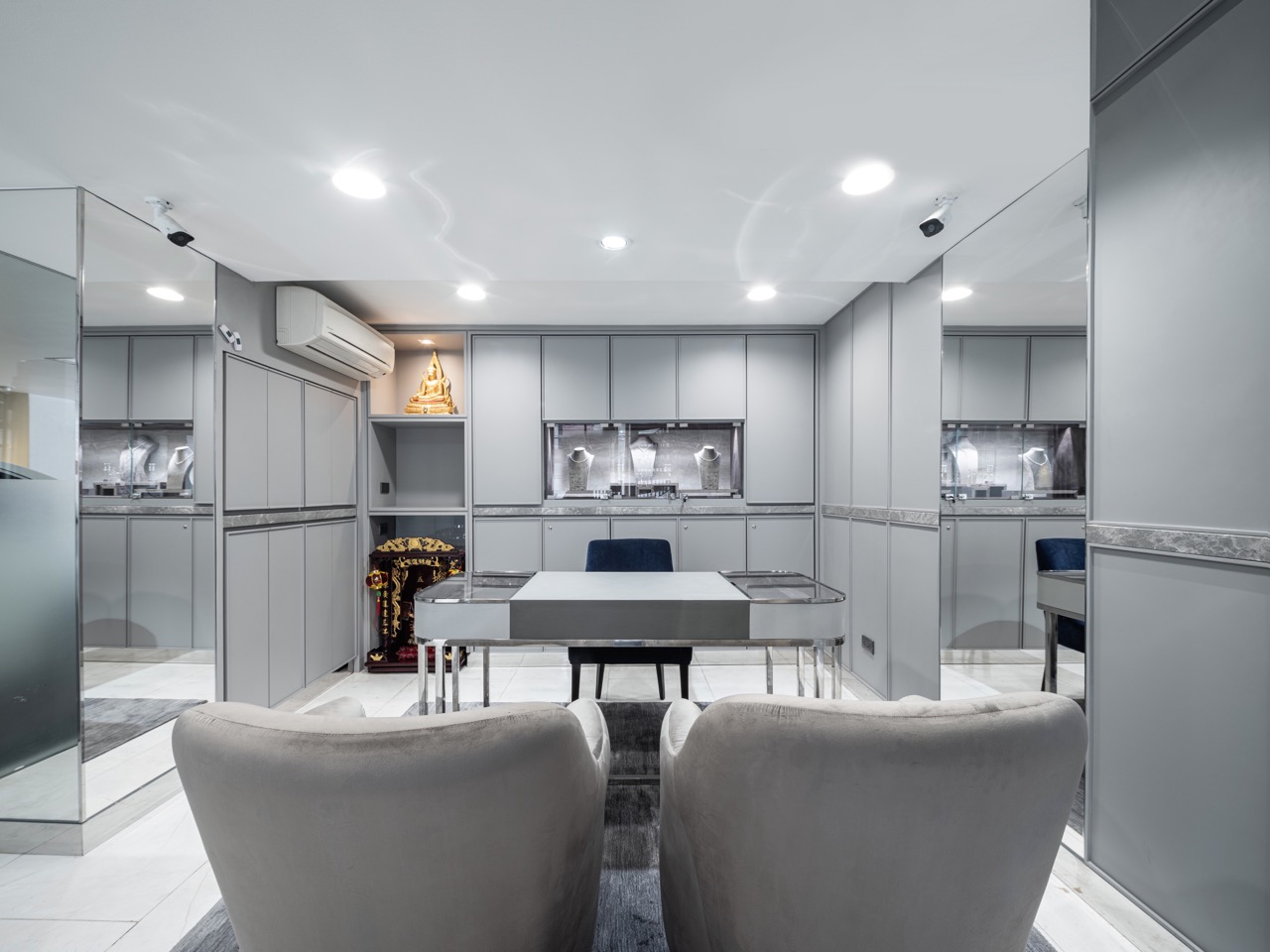
Circulation, storage and secure back-of-house sit behind the selling floor on a route no customer needs to use. Staff positions were set for natural surveillance, so the room is covered by where people stand rather than by hardware on the walls. Handled in the plan, this is invisible. Handled afterwards, it arrives as grilles and signage, and the room stops being somewhere anyone would spend an hour choosing a ring.
Light that answers the obvious question
Lighting in engagement ring store interior design is usually discussed as spectacle. Here it had a second and less glamorous job, and the two had to coexist. The display register makes the stones perform — brightness assembled from many small controlled sources rather than poured in from a few, so that a stone flashes as it moves. The working register does the opposite: even, neutral and consistent across the surface where stones are compared, so that the difference a customer sees between two diamonds is a difference in the diamonds.
A room lit only for theatre sells beautifully and creates a customer who opens the box at home under different light and feels quietly misled. The comparison surface was therefore treated as an instrument, not as a display, and the private room was lit to the same standard as the floor — a stone that fires outside and dulls where the decision is closed loses the sale in the room built to win it.
The diamond is quoted, not copied
A store named after a diamond has two ways to go. It can buy status back from its materials — gold, onyx, the whole vocabulary of the expensive — and hope the association transfers. Or it can take the one thing that actually makes a diamond a diamond, which is not the material but the cut, and build the room out of that.
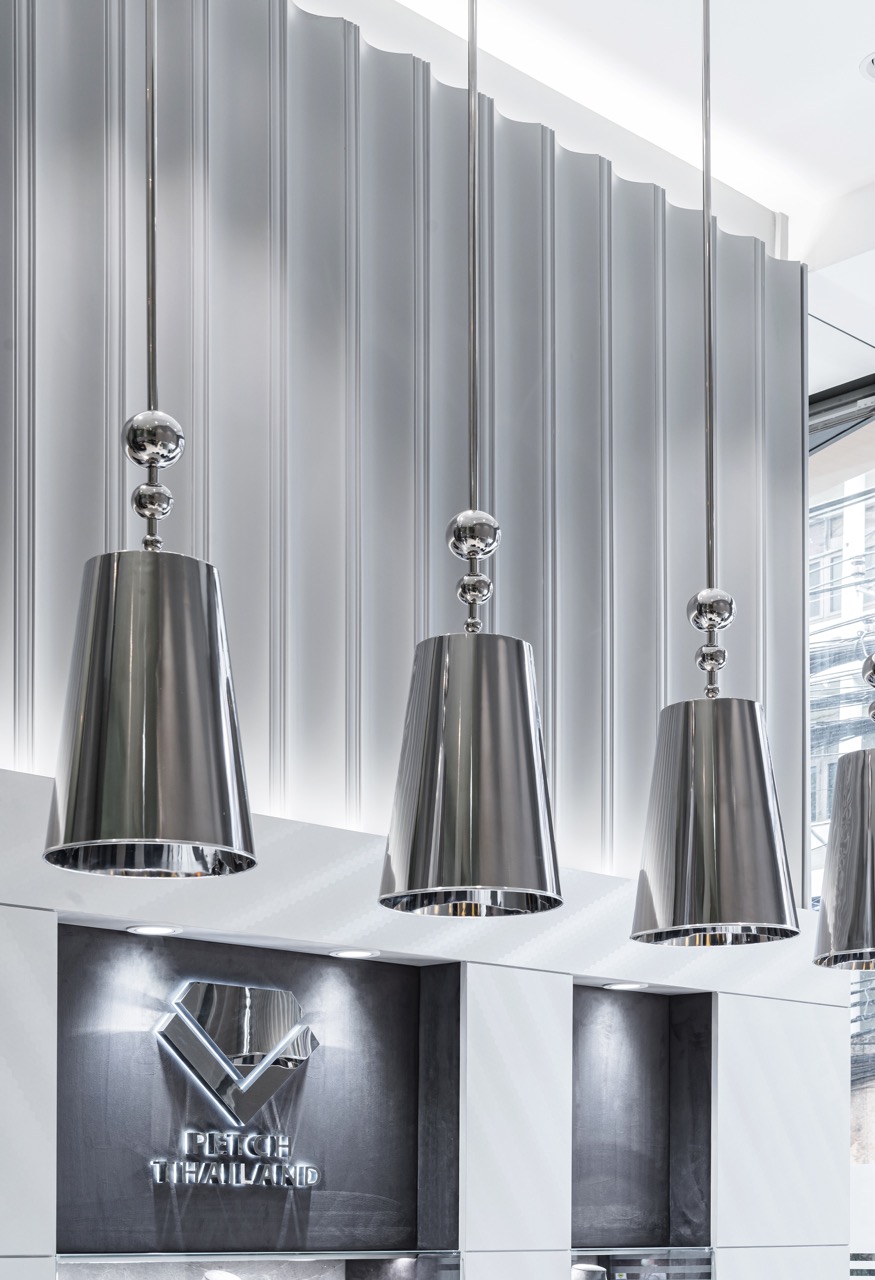
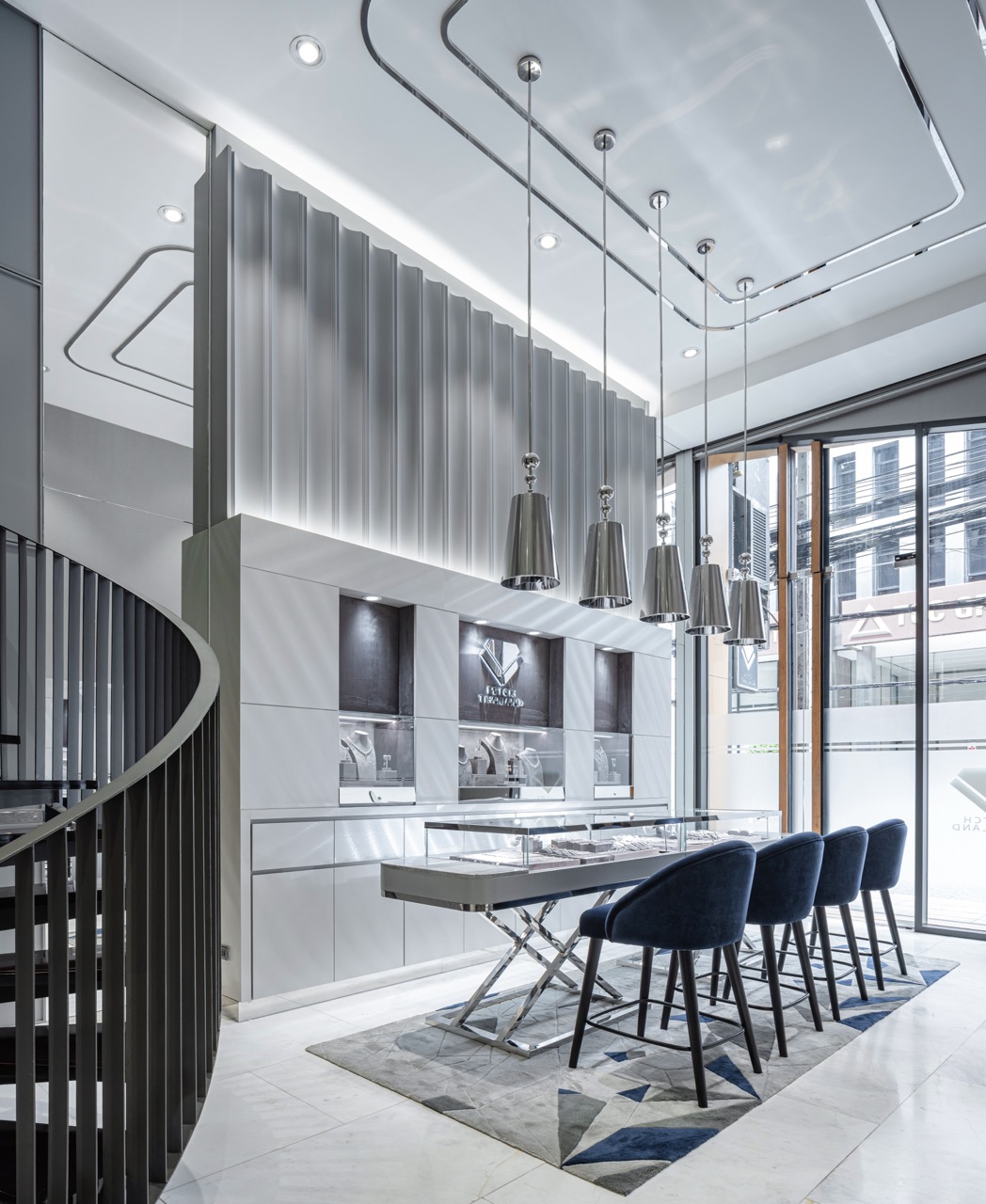
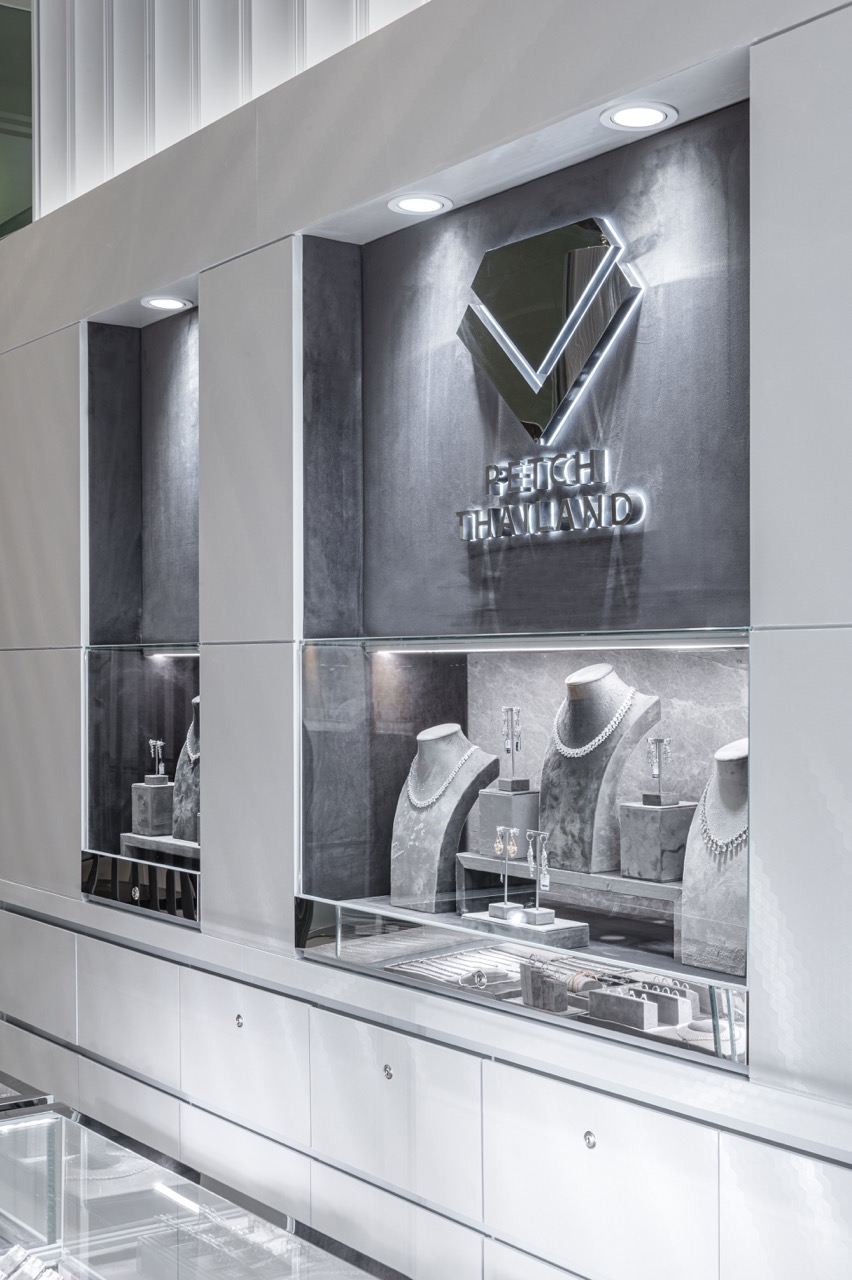
The feature wall is that argument in full. Fluted panelling — Lamitak laminate on an HMR board core, its profile drawn from facet geometry rather than from a catalogue. It makes no claim to be precious and it is not pretending to be; a wall attempting to be a diamond would only ever read as costume. What it does instead is repeat the stone’s logic at architectural scale: parallel cuts catching light along their length, a surface that shifts as a customer moves past it and settles when they stop.
The substrate is a Bangkok decision. A fluted profile carries far more exposed edge than a flat one, and in this climate, in a unit that opens onto the street, an ordinary core takes up moisture and swells along the flutes until the cut goes soft. Moisture-resistant HMR board holds the geometry sharp for the life of the fit-out. In a wall whose entire argument is the precision of a cut, the board behind it is not a back-of-house detail — it is what decides whether the idea survives its second year.
The floor answers in the one material that can afford to be literal. Polished marble with marble inlay, the darker stone cut into a faceted geometric field — the same logic underfoot, drawn slower and wider. Between wall and floor the room states the idea twice, and never once shows a picture of a diamond.
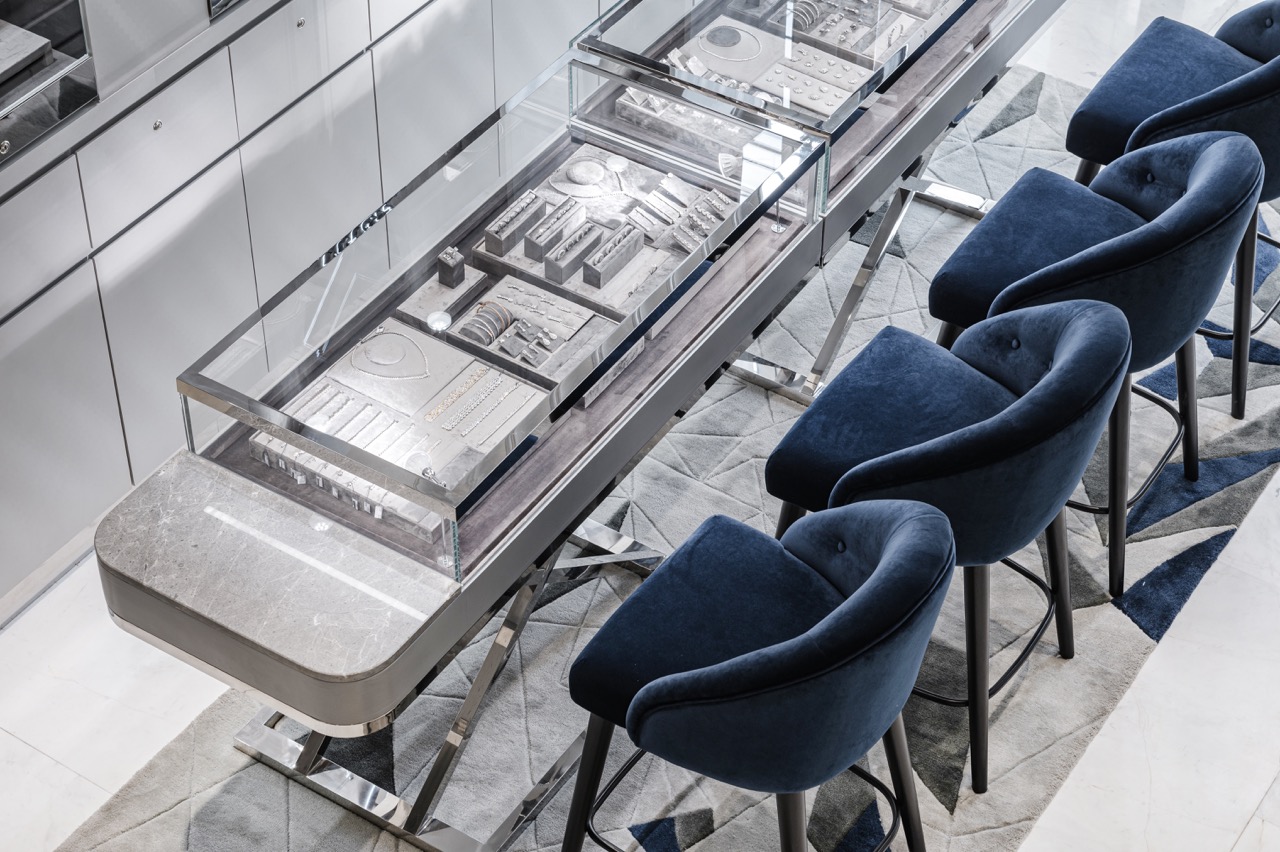
Everything reflective is working. Polished chrome on the pendants and the counter frames throws small, hard, travelling highlights of precisely the kind a stone produces — sparkle in the architecture that tunes the eye for sparkle in the merchandise rather than competing with it. Mirror is used structurally: at 120 square metres over two levels this is a tight room for a decision that takes an hour, and reflective planes buy back depth the lease does not provide.
The only warmth in the palette is the seating. Navy velvet against a field of silver, white and grey — the colour a jewellery box is lined with, and the one place in the store a customer is meant to feel held rather than impressed.
เพชร
The brand is named after its product and nothing else. Petch is the Thai word for diamond — no invented syllables, no French, no attempt to sound like somewhere other than Surawong. It is the plainest name a diamond house could take, and it is a confident one.
The interior was asked to hold the same line. Surawong has traded in stones for generations and the shops around it tend to signal value by piling it on: gold, mirror, pattern, everything at once. A store that argues for itself that loudly is a store that suspects the product cannot. This one is disciplined instead of loud — a single idea, the cut, carried in silver, white and grey and repeated at every scale from the wall to the floor. Nothing in the room is decorative that is not also doing the diamond’s work.
The project: engagement ring store interior design, Bangkok
Petch Thailand occupies a 120-square-metre unit on Surawong Road in Bangkok, inside the city’s jewellery trade district, arranged over ground and mezzanine floors. The selling floor, comparison surfaces and display systems sit at street level; the private consultation room, staff areas and secure storage are lifted to the mezzanine, so the closing end of the process leaves the open floor entirely. Gratitude Design was appointed on the full engagement ring store interior design under a design and FF&E commission — concept, documentation, and the specification, procurement and installation of the display systems, consultation area and every loose piece on the floor. The project completed in 2020.
The store was named Winner, Retail Interior Asia Pacific, at the International Property Awards 2022. Photography by Panoramic Studio.
Recognition
- International Property Award 2022 — Retail Interior
- Featured in ROOM / Baanlaesuan — project feature, 2021 ↗
- Featured in art4d — studio interview, 2025 ↗
Planning a retail fit-out?
Whether the brief is engagement ring store interior design or a broader retail interior fit-out, bring the lease, the product, and how your customers actually arrive — booked, walk-in, or both. A first meeting costs nothing and commits no one. Contact the studio — we come back within two working days, in English or Thai.