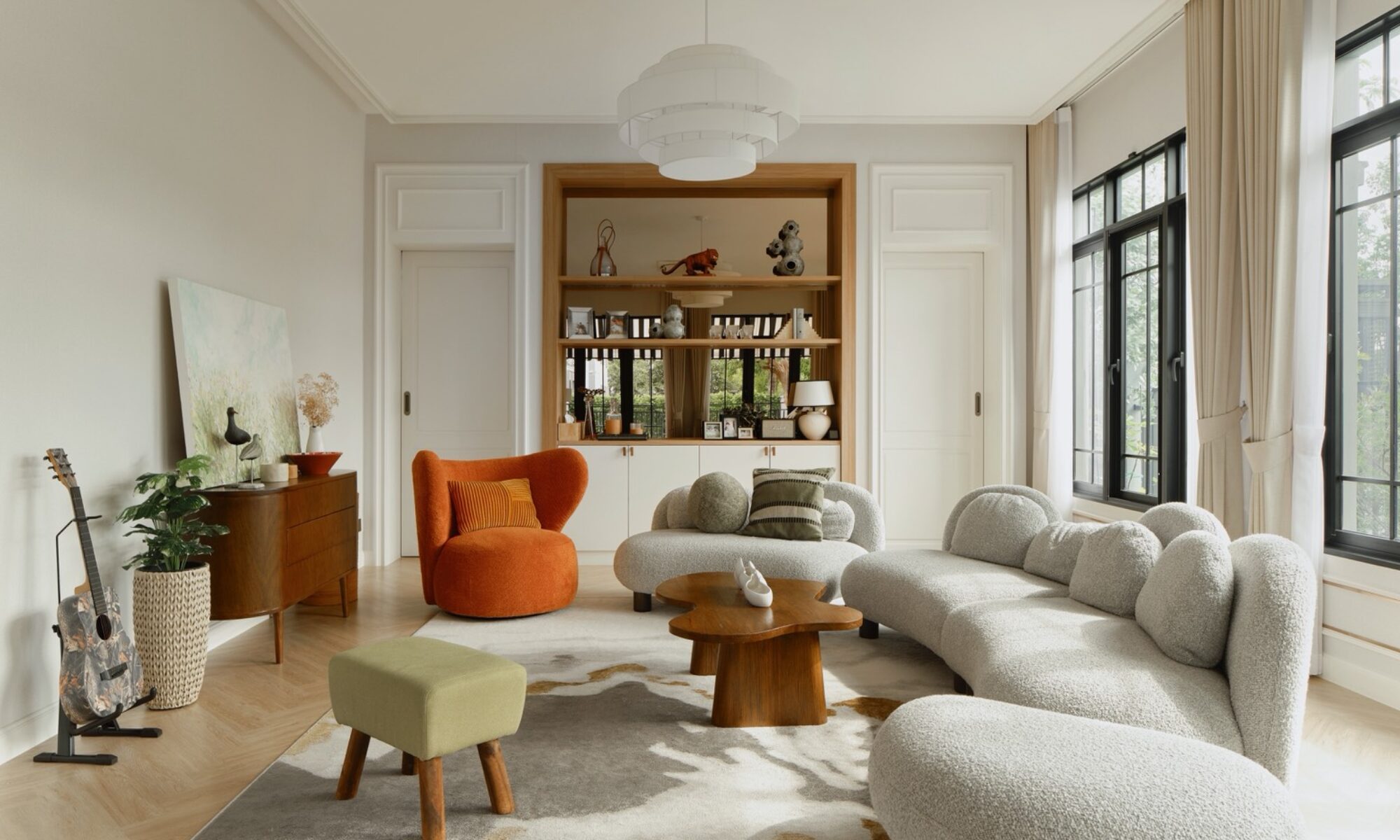

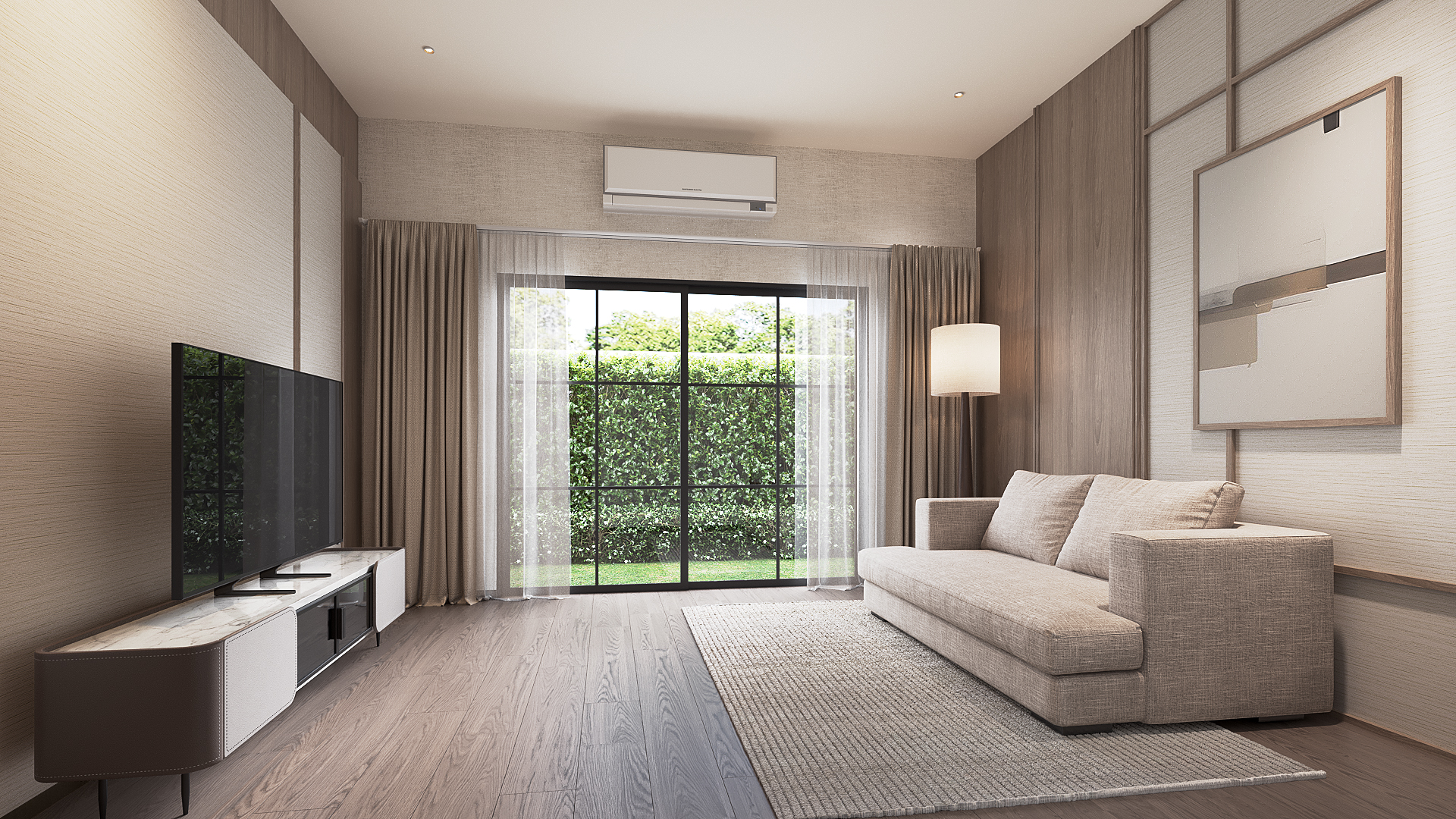
The phrase has been worn smooth. “Quiet luxury” now describes a palette — oatmeal, bouclé, limestone — and a mood of expensive understatement, and it is applied to almost anything that is not gold. That is not what we mean by it, and it is not what our clients are paying for. When the studio describes its residential work as tailored luxury, quiet rather than loud, it is describing a way of making decisions, not a colour card. Below are the seven decisions, in the order they are made, with the houses and apartments where they were tested.
Proportion before anything
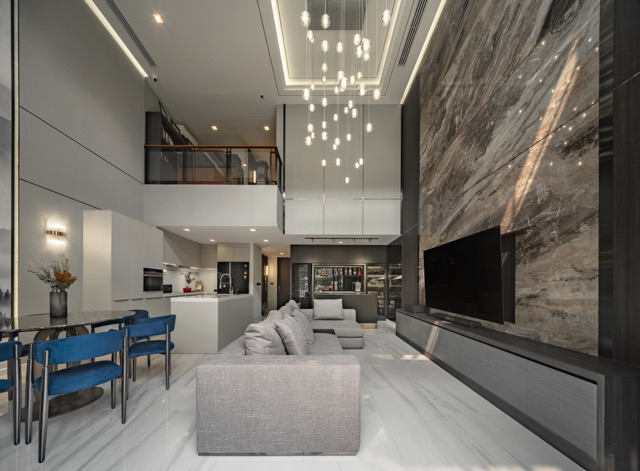
The first luxury in a room is that its parts are the right size for each other. It is also the one a visitor never consciously registers — they feel that a room is calm without being able to say why. At Quarter31, a 410-square-metre house off Sukhumvit 31, the double-height living room was given exactly three things to do with its height: a full-height ink-wash mural over the dining table, a two-storey wall of storm-figured marble behind the television, and a fall of seeded-glass pendants between them. Everything else in the house is held to furniture scale. That is why four hundred and ten square metres reads as calm rather than grand — the volume is spent in three places and nowhere else. Proportion is decided at the section, before a single finish is chosen, and it cannot be bought back later.
Material that improves with use
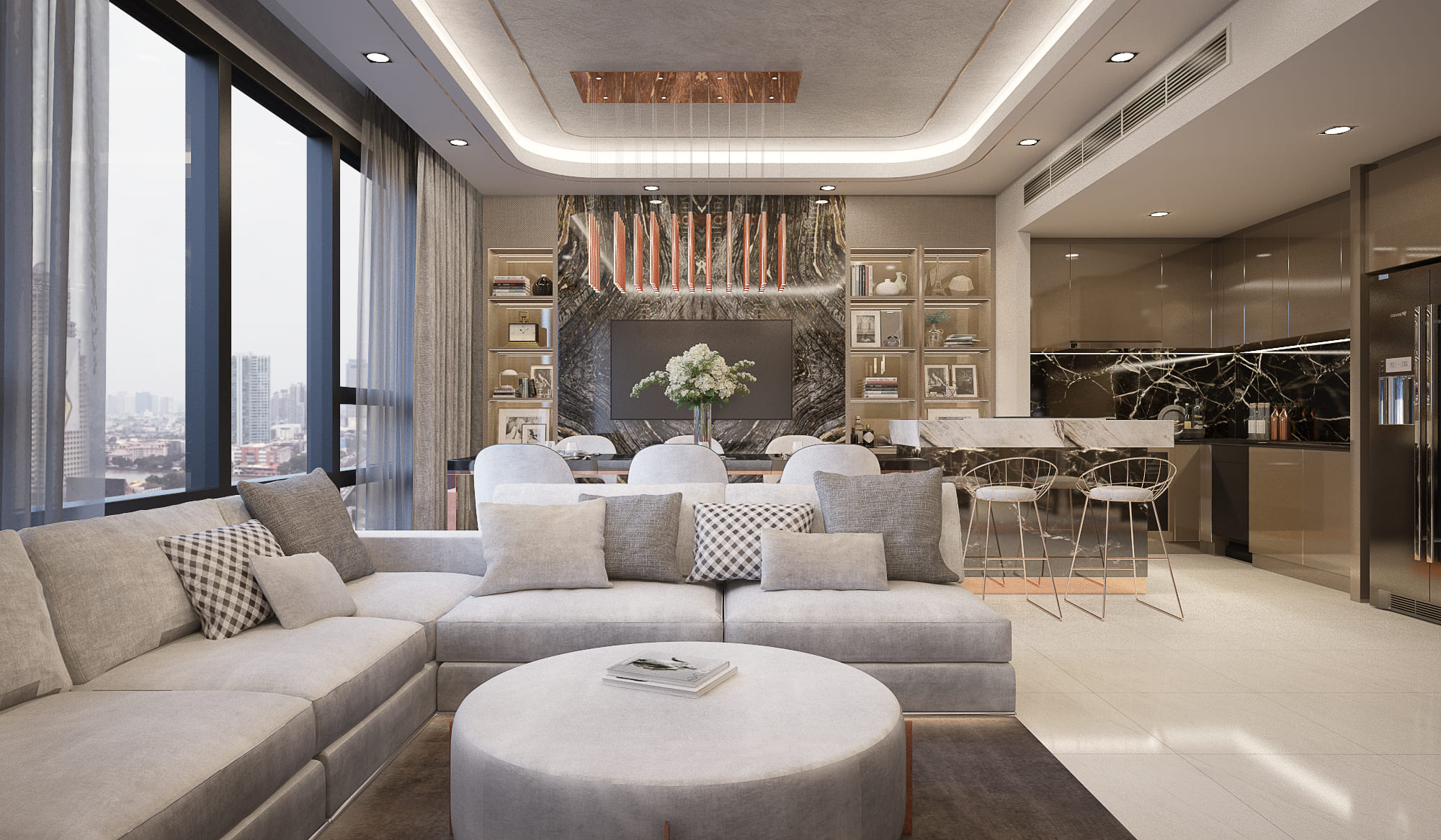
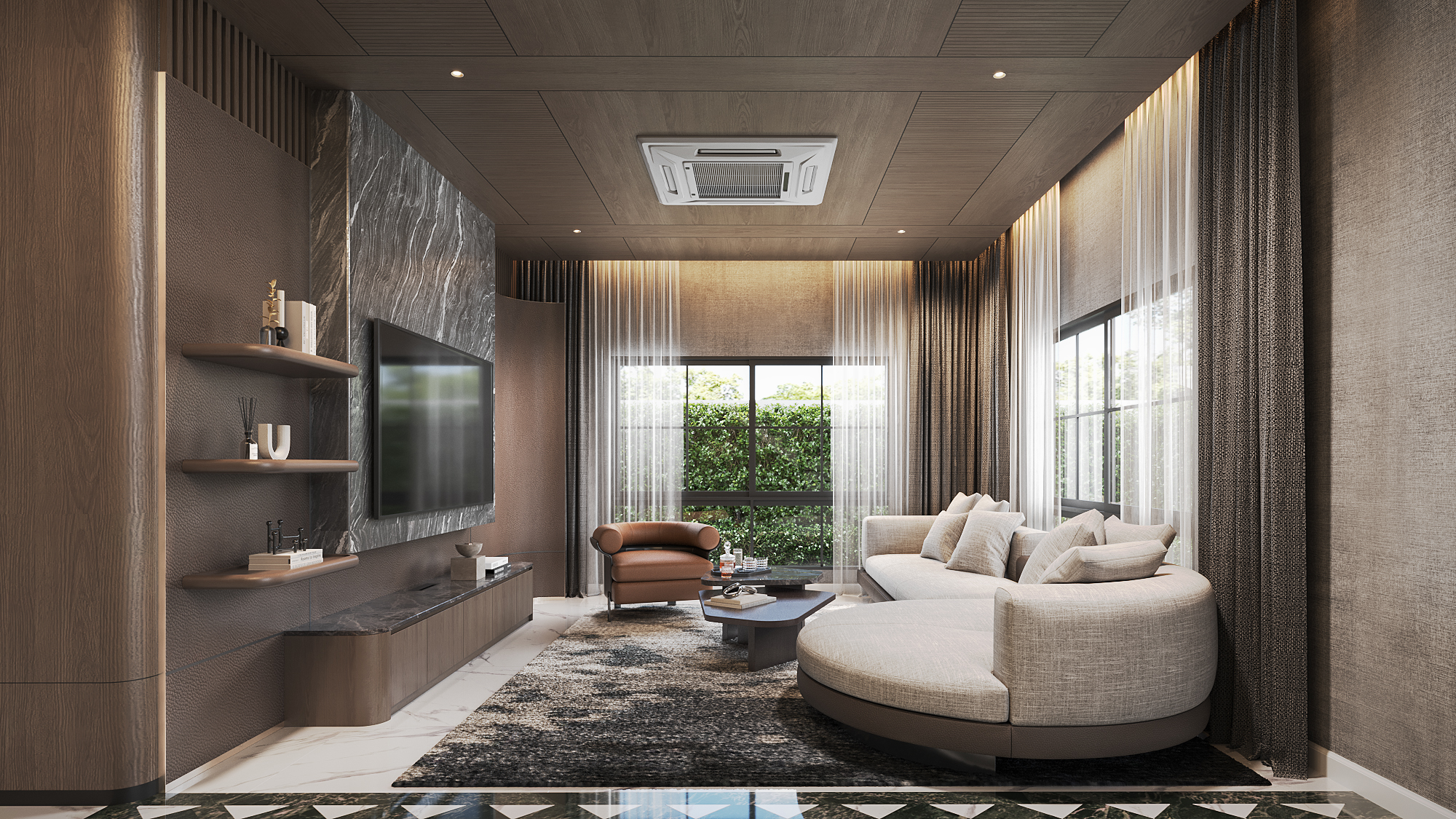
Loud luxury is a finish that photographs well on handover day. Quiet luxury is a material that looks better after five years of hands and weather. The difference is not price; it is how the material behaves. Stone with real figure, timber that takes a patina, leather that softens, lime plaster that holds light — these get better. High-gloss lacquer, printed veneer and mirror-polished metal get worse, and they announce themselves in the meantime. Across the studio’s apartments the palette is held to four or five materials each — smoked oak, bronze and pale limestone with a single dark book-matched stone at The Bangkok Sathorn; oak, tan leather, white panelling and travertine at the Ritz-Carlton Residences — and each room is allowed one gesture. The restraint is not austerity. It is what lets the one gesture be heard.
Light, mostly hidden
In every residence the studio has completed, most of the light comes from somewhere you cannot see: coves that wash the ceiling, shelf edges lit from within, cabinets that glow behind glass, a ribbon of warm light along a counter. Downlight grids belong to offices. Hidden light does two things a visible fitting cannot — it makes a ceiling feel taller than it is, and it lets the room change with the hour, so the same living room reads differently at four in the afternoon and at ten at night. At The Bangkok Sathorn the lighting is almost entirely indirect so that the city outside stays the brightest thing in the room. That is a deliberate hierarchy: the view first, the room second, the fittings not at all.
Craft you can touch
Quiet luxury lives at arm’s length, not in the photograph. The radius of a counter edge; the temperature of light on stone; a channel-stitched headboard; brass inlay set into smoked oak; a drawer that closes the same way in year six as on day one. The studio draws every piece of joinery itself and details it to the room rather than buying it to fit, because that is where the difference between a good room and a resolved one is made. At Quarter31 the master bedroom is composed in Art Deco — brass inlay over smoked oak, fan-patterned wallpaper, the stitched headboard — a room with its own vocabulary that still answers to the same restraint as the rest of the house. Craft is what allows a room to have character without raising its voice.
Comfort as the test
A room can be beautiful and still fail. The test the studio applies is whether the house stays calm when the whole family is home, and whether it still reads as considered after a year of ordinary use. Comfort in this sense is not softness; it is the absence of friction — the bedside that is already there when you reach for it, the storage that means nothing is left out, the dining table long enough for the people who actually eat there. Setthasiri Donmuang, a 400-square-metre house in north Bangkok, was briefed in a single sentence — a home that feels like a luxury hotel — and the answer was not a lobby to live in but the particular calm of a good suite: cove-lit ceilings, upholstered walls, every decision already made before you enter the room.
The owner’s identity, not the studio’s
Here the phrase is most often misused. Quiet luxury is not a house-style; it is a discipline for making a house belong to the people who live in it. The Ritz-Carlton residence inherited a formal shell — classical panelling, a skyline — and answered it with family: oak and tan leather instead of showroom lacquer, a table for three generations, a nursery given the same attention as the master suite. Quarter31’s middle floor is built around the family’s own objects and a piano corner. The measure of a finished project is whether the client recognises it as made for them rather than for the studio’s portfolio. A room that looks like a magazine spread but not like its owner has failed the brief, however expensive it is.
Longevity: designed to outlast the photograph
The last decision is about time. Trend-led rooms date from the day they are photographed; the loud gesture that wins attention in year one is the thing that has to be removed in year six. Quiet luxury is a bet on the opposite — materials that age, proportions that do not go out of fashion, lighting that can be re-tuned rather than replaced, joinery that is built rather than bought. It is also the reason the studio prefers to carry a house from drawing to hand-over under one contract: longevity is decided in the details that get simplified when the concept is handed to someone else at the end of the design stage.
What this means if you are commissioning a home
If you want a house that announces itself, there are studios that do that well; this is not one of them. If you want a house that is calm on an ordinary Tuesday, that your guests cannot quite explain and that looks better in a decade than on handover day, then the seven decisions above are the brief — and the finishes, the ones most people arrive with, are the last thing we will talk about.
Gratitude Design is a residential interior design studio in Bangkok whose completed homes include Quarter31, Setthasiri Donmuang, The Bangkok Sathorn and the Ritz-Carlton Residences Bangkok. Read about the studio, or start a conversation about your residence.