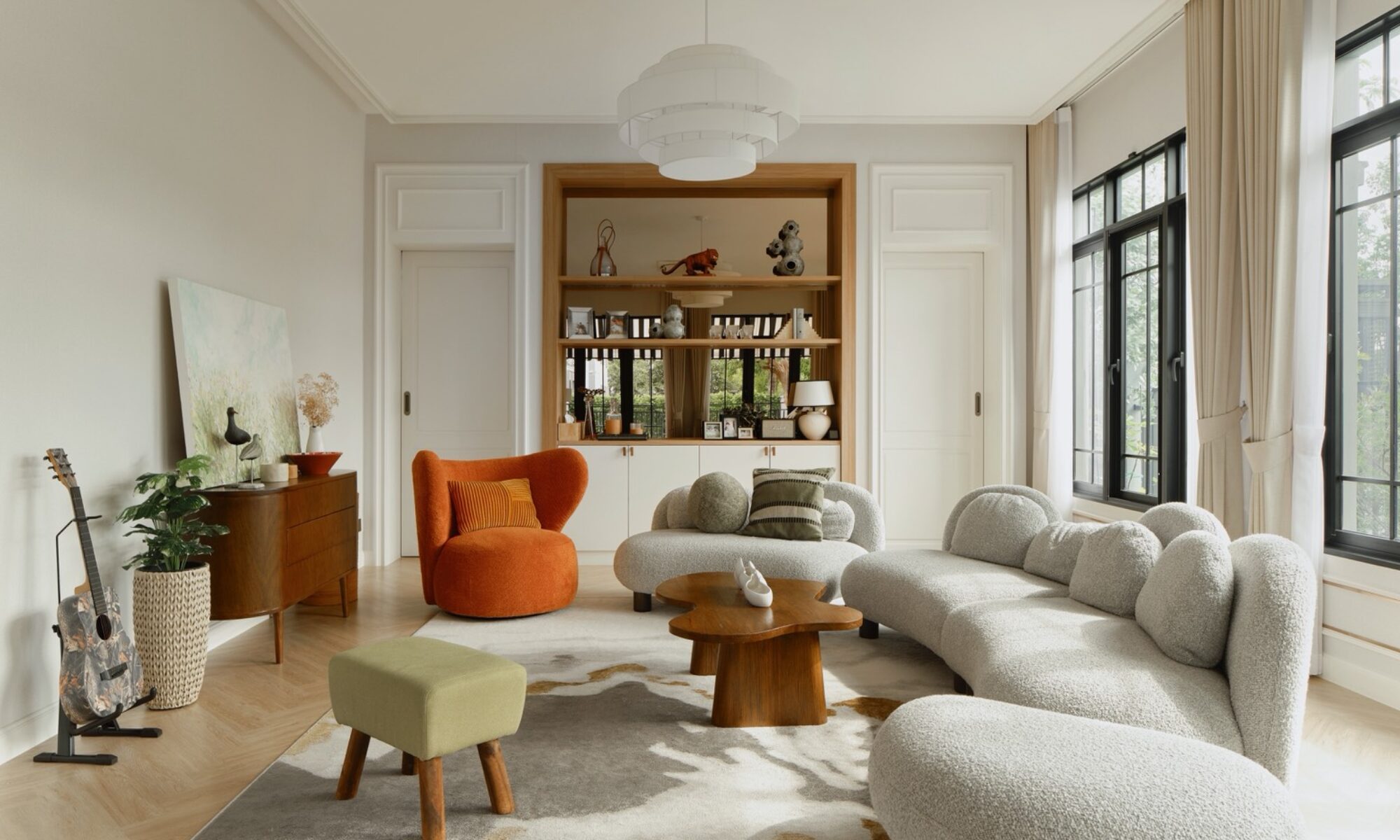

The question usually arrives in the first meeting, phrased as a choice: do we need an interior designer, or a contractor who can do the whole thing? In Thailand the honest answer is that the words describe three different ways of buying the same result, and the right one depends less on the size of the project than on who you want to be accountable when something on site is wrong. Having delivered more than fifty projects turn-key since 2015 and documented others for owners’ own builders, this is how we would explain the difference to a friend.
Where projects actually fail
Most interiors do not go wrong in the drawing. They go wrong in the gap between the drawing and the site. A design is resolved and documented, a contractor prices it, and the substitutions begin exactly where cost and effort concentrate — which is where the design lives. A specified stone becomes a similar stone; a lighting temperature becomes whatever the supplier had; a joinery detail is simplified because it was inconvenient. The owner then spends months adjudicating between a designer who blames execution and a contractor who blames the documentation, often in a language they do not speak. Both are partly right. Everything below is a way of deciding, before you start, who closes that gap.
Route one: design and documentation only
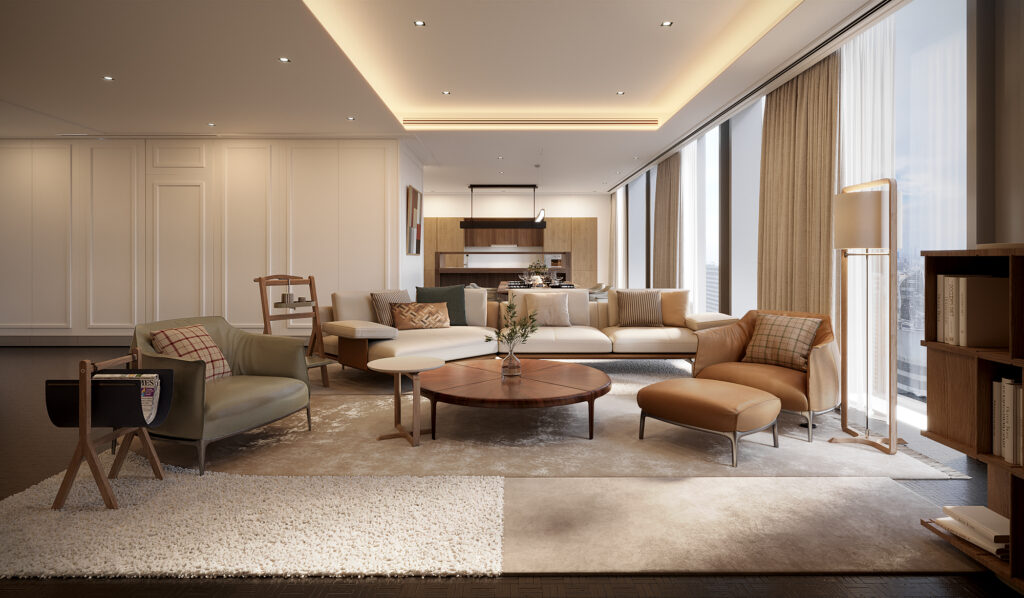
You commission the concept, the design development and a full construction set — drawings and specifications complete enough for any competent builder to price and construct without guessing — and you appoint the contractor yourself. This is the right route when you already hold a relationship with a builder you trust, when a corporate procurement policy requires competitive tender, or when the project is large and simple enough that open pricing genuinely wins. The Ritz-Carlton Residences apartment was commissioned this way: interior design, bespoke joinery and a complete FF&E documentation set, built by the owner’s own team to the management office’s approvals. The discipline that makes it work is drawing for a stranger — a set that would survive an open tender is a set that survives construction.
Route two: a contractor who also designs
Many contractors in Thailand offer design as part of a build contract, and for a straightforward fit-out it can be efficient. The trade to understand is that the design is priced as an input to the construction margin, so the drawings tend to be produced to the level the builder needs rather than the level the owner would choose, and the substitutions described above happen inside one company, where nobody has an incentive to flag them. If the detail is not the point — a standard office floor, a plain retail unit — this route is often adequate. Where the detail is the point, bespoke joinery, integrated lighting and book-matched stone are precisely what a general contractor prices as a risk and builds as an approximation.
Route three: turn-key by the studio that drew it
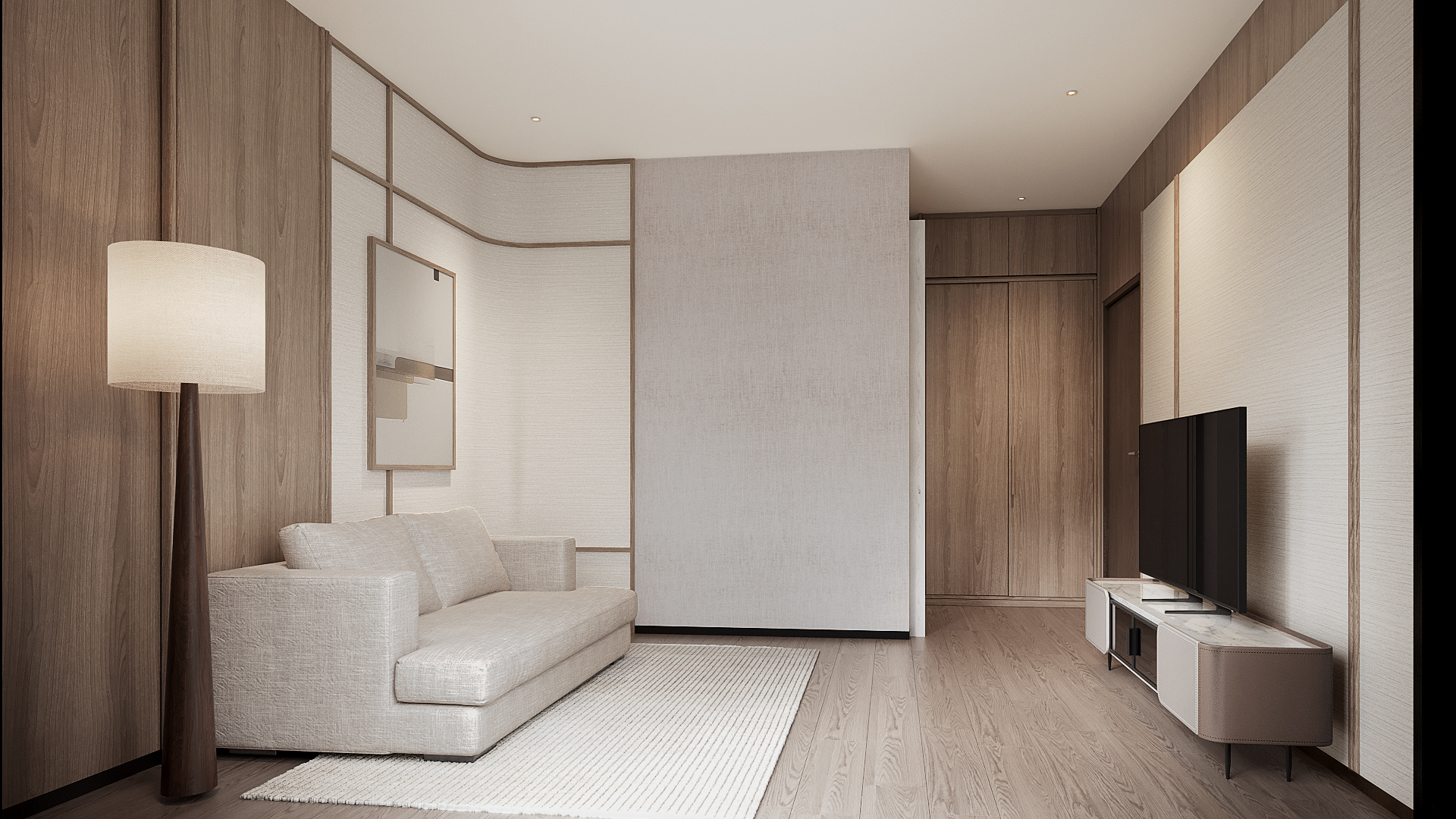
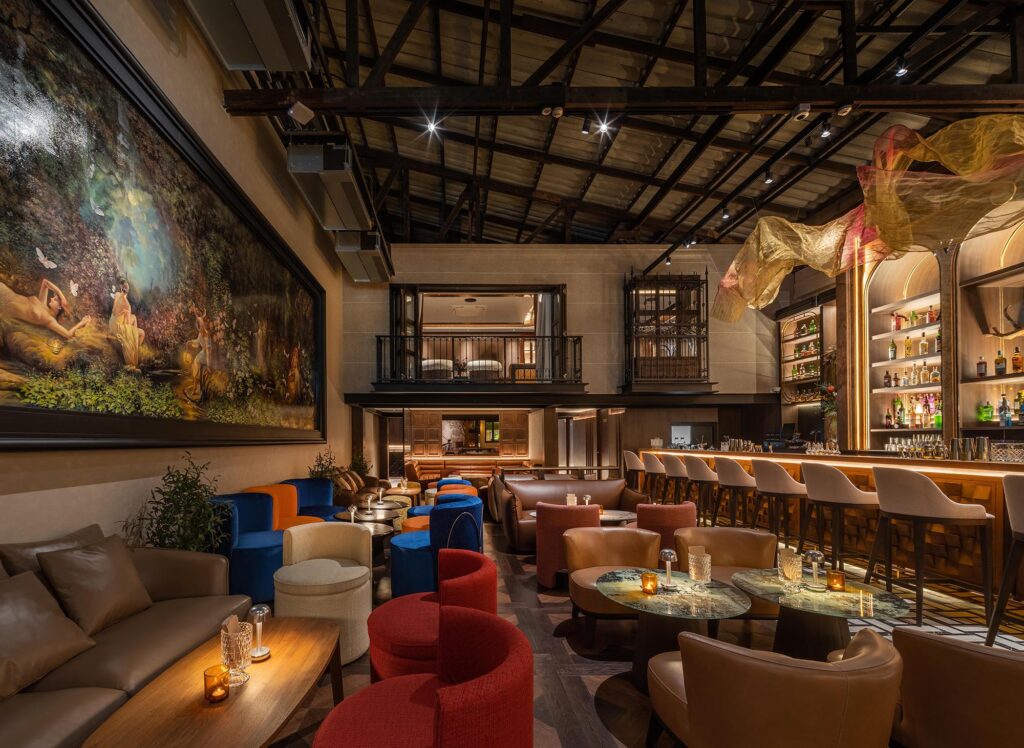
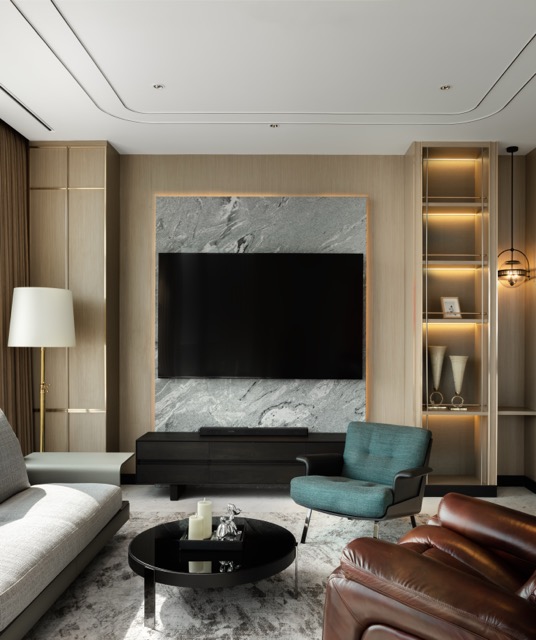
On a turn-key commission the studio that designed the space is the one accountable for building it: its own site supervision, its own trades for joinery, lighting and finishes, its own procurement and installation of every loose piece, styling, snagging and handover — under one contract, at a price and a date agreed before work begins. The drawings are still produced to tender standard, because that is what keeps a set honest, but the party who would have interpreted them is the party who made them. When a coordination error surfaces on site, it is ours to absorb rather than yours to arbitrate. Kilik Social Club went from bare warehouse to opening night this way, and the Four Seasons Private Residences apartment — eighty square metres in a building with its own rulebook — was handed over furnished and ready to live in on the same basis.
A fourth arrangement worth knowing
Between the routes sits a hybrid the market rarely names: the studio designs and documents, a contractor builds, and the design lead stays on site through construction with authority over substitutions. MU:IN was built by King Big Wood to our documentation with the design lead on site, and it is now the studio’s most decorated room. It works when the contractor is capable and the owner wants competitive pricing without losing the concept — but it only works if the supervision is written into both contracts rather than assumed.
How to decide
Ask three questions. First, is the date commercial or aspirational — a lease running, a licence pending, a family moving — because a commercial date favours a single accountable party. Second, is the detail the point? If the answer is yes, the interpretive layer is your biggest risk and turn-key removes it. Third, when something is wrong at handover, how many phone calls should it take to reach the person who can fix it? On a turn-key project the answer is one.
Whichever route you choose, insist on two things: a documented design before anyone prices it, and variations quoted and approved in writing before the work is done. The agreed sum should move only when you change the scope. Cost arising from the builder’s own buying, sequencing or coordination should be theirs to absorb — and the contract should say so.
Gratitude Design is an interior design studio in Bangkok that has delivered more than fifty projects turn-key since 2015 and documented others for owners’ own builders. How the turn-key route runs, and when we advise against it, is set out under turn-key interior design and build; the design-only route under services. Tell us about your project and we will say which route fits it, in English or Thai. See also how much does interior design cost in Bangkok.
Related reading
How to choose an interior designer in Bangkok: 9 checks before hiring
How long does it take to design and build a luxury home in Bangkok?